How to Choose the Best Option for Your Financial Needs
Managing personal finances often means navigating the world of credit. Among the most common borrowing tools are personal loans and credit cards, each offering unique advantages depending on your goals. Understanding the nuances between the two can help you make more informed choices and maintain strong financial health. Since both options serve different purposes, deciding which one fits your situation requires analyzing interest rates, flexibility, repayment terms, and fees.
In this article, you will discover everything you need to know about Personal Loans vs. Credit Cards, including how they work, where they differ, when to use each option, and how to protect yourself from overspending. We will also share tips for building credit wisely, avoiding debt traps, and improving your long-term financial stability.
What Are Personal Loans?
A personal loan is a type of installment credit offered by banks, online lenders, and credit unions. When you take out a personal loan, you borrow a fixed amount of money and repay it through monthly installments over a predetermined term, usually between 12 and 60 months.
How Personal Loans Work
Personal loans typically have:
- A fixed interest rate
- A fixed repayment schedule
- A set loan amount
- A clear payoff date
Because the terms are predictable, personal loans offer stability, making them suitable for large, planned expenses.
Common Uses for Personal Loans
Consumers often use personal loans for:
- Debt consolidation
- Home improvements
- Major purchases
- Medical expenses
- Emergency financial needs
- Weddings and large life events
Since personal loans provide a lump sum upfront, they are ideal for situations requiring a substantial amount of money at once.
What Are Credit Cards?
Credit cards are a form of revolving credit. Instead of receiving a lump sum, you have access to a credit limit, and you can use as much or as little of that limit as needed.
How Credit Cards Work
Credit cards allow you to:
- Borrow repeatedly as you pay down your balance
- Benefit from flexible monthly payments
- Use credit for everyday purchases
- Earn rewards depending on card type
Unlike personal loans, credit cards usually come with variable interest rates and no predetermined payoff date.
Common Uses for Credit Cards
People often rely on credit cards for:
- Everyday expenses
- Online shopping
- Travel and reservations
- Short-term financing
- Emergency purchases
Because they offer convenience and constant access to credit, credit cards have become a staple tool for daily financial management.
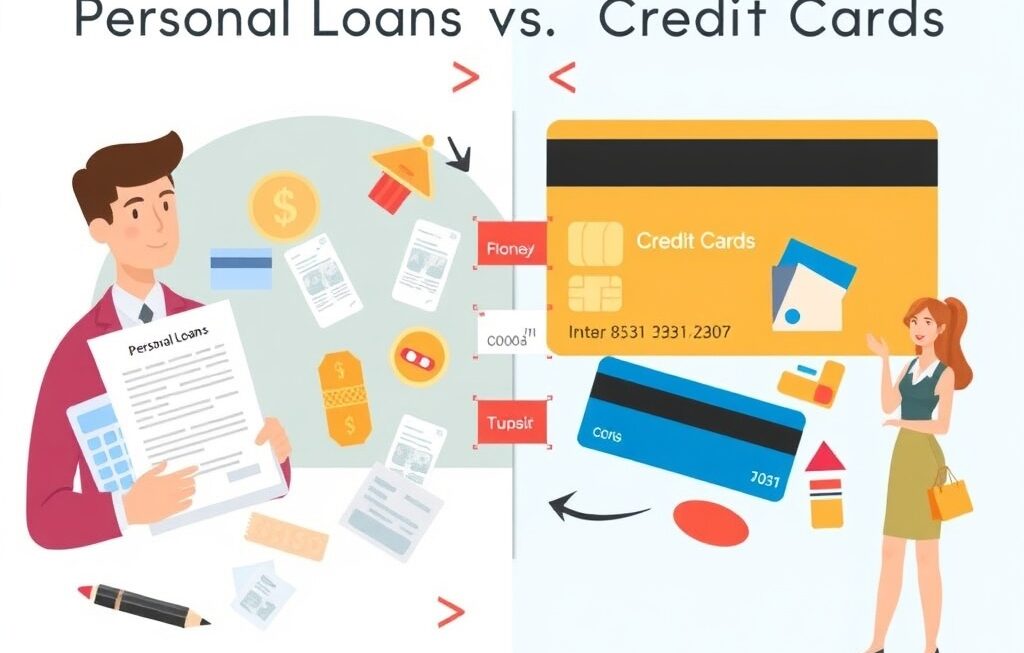
Personal Loans vs. Credit Cards: Key Differences
To decide which option is best for you, it is essential to compare their core features. While both are popular borrowing methods, the differences between them can significantly impact your financial strategy.
1. Interest Rates
Personal loans frequently offer lower, fixed interest rates, especially for borrowers with good credit.
Credit cards, on the other hand, usually have higher, variable APRs, often ranging from 18% to more than 30%.
2. Repayment Structure
- Personal loans: Fixed monthly payments until the debt is paid.
- Credit cards: Flexible payments, minimum monthly options, and revolving balances.
3. Borrowing Amount
- Personal loans: Ideal for larger sums.
- Credit cards: Better suited for smaller, frequent purchases.
4. Fees
Both options may include:
- Origination fees
- Late payment fees
- Annual fees
- Balance transfer fees
- Cash advance fees
However, credit cards generally have more fee categories.
5. Impact on Credit Score
Both can affect your credit score through:
- Payment history
- Credit utilization
- Length of credit history
- Types of credit used
Credit cards directly influence credit utilization, while personal loans do not.
When to Choose a Personal Loan
Choosing a personal loan is typically the smarter option when you need predictable payments, lower interest rates, and a structure that helps you stay disciplined.
Best Scenarios for Using a Personal Loan
You should consider a personal loan when:
- Consolidating high-interest debts (like credit cards)
- Financing a major home project
- Covering medical treatments
- Handling unexpected financial emergencies
- Paying for significant life events
Because personal loans lock you into a fixed plan, they can help you avoid the temptation of revolving debt.
When to Use a Credit Card
Credit cards offer flexibility, rewards, and instant access to funds. They are ideal when used responsibly and paid in full each month.
Best Scenarios for Using a Credit Card
Consider a credit card when:
- Making everyday purchases
- Earning rewards or cashback
- Traveling abroad
- Shopping online
- Covering short-term expenses
Credit cards are especially useful for building credit history, as long as you maintain low balances.
Advantages of Personal Loans
Understanding the benefits helps you identify why personal loans may be a better fit for certain situations.
1. Lower Interest Rates
This can save you hundreds or even thousands of dollars over time.
2. Predictable Monthly Payments
Budgeting becomes easier because your payment doesn’t change.
3. No Credit Utilization Impact
Personal loans do not count as revolving credit, so they don’t increase utilization.
4. Clear Debt Timeline
You know exactly when the debt will be paid off.
Advantages of Credit Cards
Credit cards offer unique benefits that personal loans cannot match.
1. Flexibility
Use what you need and repay on your own schedule.
2. Rewards and Cashback
Some cards offer travel points, cashback, or discounts.
3. Emergency Access
You can use credit instantly whenever needed.
4. Build Credit Quickly
Responsibly using a credit card is one of the fastest ways to improve your credit score.
Disadvantages of Personal Loans
Before applying for one, it is crucial to consider the drawbacks.
1. Fixed Debt
Once the loan is approved, you cannot borrow additional funds without applying again.
2. Origination Fees
Some lenders charge upfront fees.
3. Higher Consequences for Default
Late payments can significantly damage your credit.
Disadvantages of Credit Cards
Misuse can lead to long-term financial problems.
1. High Interest Rates
Carrying a balance becomes expensive quickly.
2. Overspending Risk
Because credit is always available, spending habits can spiral.
3. Credit Utilization Impacts Your Score
High balances lower your credit score.
How to Choose Between Personal Loans vs. Credit Cards
Making the right choice depends on your specific situation. Ask yourself:
- Do I need a large amount of money upfront?
- Can I commit to fixed monthly payments?
- Is my goal to manage cash flow or finance a long-term project?
- Am I trying to improve my credit score?
- Do I benefit from credit card rewards?
General Recommendation
- Choose a personal loan for structured, large expenses or debt consolidation.
- Choose a credit card for smaller purchases, rewards, and short-term borrowing.
Tips for Using Personal Loans Wisely
- Compare lenders before applying
- Check APR, not just interest rate
- Borrow only what you need
- Avoid long loan terms that increase total interest paid
- Set up automatic payments
- Monitor your credit score regularly
Tips for Using Credit Cards Responsibly
- Pay your balance in full every month
- Keep utilization below 30%
- Avoid cash advances
- Use rewards strategically
- Watch out for annual fees
- Review statements monthly
How Personal Loans and Credit Cards Impact Credit Score Over Time
Understanding credit scoring is essential for long-term financial health. Both tools influence:
Payment History
On-time payments improve your score; missed payments lower it significantly.
Credit Mix
Having both revolving and installment accounts can improve your profile.
Credit Utilization
Credit cards affect this directly — keep balances low.
New Credit Inquiries
Applying for loans or cards temporarily lowers your score, but this effect fades.

In Summary: Making the Best Financial Choice
When comparing Personal Loans vs. Credit Cards, the best choice depends on your goals, needs, and financial habits. Personal loans offer stability and lower interest rates, while credit cards offer flexibility and rewards. Understanding how each option works helps you borrow smarter and protect your long-term financial health.
Making informed decisions today leads to stronger financial freedom tomorrow.